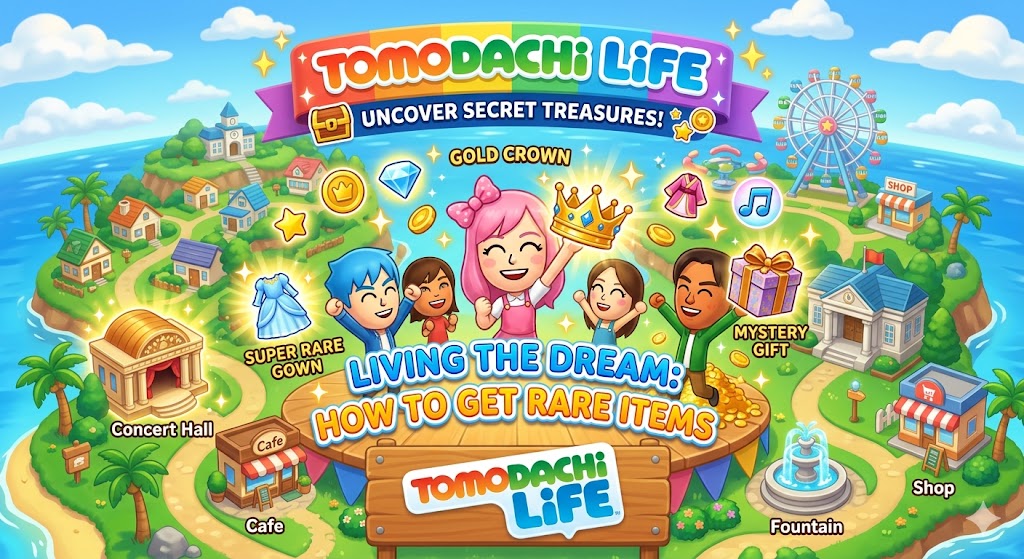
I have been hoarding rare items in Tomodachi Life Living the Dream like a digital packrat for weeks now. And I finally cracked the patterns behind what drops, when it drops, and why certain players get way luckier than others.
Here is the truth. Getting rare items in Tomodachi Life Living the Dream is not random. Well, not entirely. There are specific actions you can take to dramatically improve your chances. But the game never explains any of this. It just hands you a tissue box from a minigame and expects you to figure out the rest yourself.
I burned through my first two weeks selling everything at the pawn shop. Turns out some of those “junk” items were actually rare treasures I will never see again. Do not make my mistake. Let me walk you through every method I have found for getting the good stuff.
How the Item System Works
Every item in Tomodachi Life Living the Dream falls into one of several categories. You have foods, clothing, interiors, hats, treasures, and special items. Most are common. You will see them constantly in shops and minigame rewards. But a small percentage are genuinely rare and only appear under specific conditions.
The game does not label items by rarity. There is no color coding or star rating system. You just have to learn through experience which items show up often and which ones almost never appear. After tracking my drops for about three weeks, I noticed clear tiers.
Common items appear in shops daily and drop from basic minigames. Things like plain t-shirts, rice balls, and generic room designs.
Uncommon items rotate through shops on weekly cycles. You might see a specific hat one week and then not again for a month.
Rare items only come from specific sources. Certain minigames, high-happiness milestones, seasonal events, and the fountain during peak hours.
Ultra-rare items seem tied to relationship milestones and level-up rewards at higher Mii levels. I have only gotten a handful across my entire playthrough.
The Fountain Is Your Best Friend
The fountain is where your Miis throw money at you. But it also occasionally gives items instead of cash. And some of those items are rare.
Based on what I have tracked, the fountain payout depends on two things. First, how many Miis are on your island. More Miis means more potential drops. Second, how happy those Miis are overall. A happy island generates better fountain rewards.
Here is what I noticed about timing. The fountain seems to give better items during the first check of the day. If I load the game fresh in the morning and head straight to the fountain, I get items more often than cash. If I visit it a second or third time later that day, it skews heavily toward coins instead.
I cannot confirm this is coded behavior. It might just be my luck pattern. But other players in online communities have reported the same thing. Morning fountain visits seem juicier.
My advice: Visit the fountain once per real-world day. Do it first thing. Do not sell what you get immediately. Check whether the item is something you have seen before. If it looks unfamiliar, hold onto it.
Minigames Drop Different Rarity Tiers
When a Mii gets a green thought bubble, they want to play a minigame. Always do these. Every single time. The rewards vary but minigames are one of the most reliable rare item sources in the game.
Not all minigames are equal though. Some drop common treasures like plastic toys and fake gems. Others can drop genuinely rare clothing pieces, interiors, and special hats.
From my experience, here is roughly how the drops shake out:
| Minigame Type | Common Reward | Rare Reward Chance |
|---|---|---|
| Catch games | Generic treasure | Low |
| Memory match | Clothing pieces | Medium |
| Rhythm games | Hats and accessories | Medium to High |
| Puzzle games | Interior designs | High |
The rhythm games in particular seem generous with rare drops. I have gotten three hats from rhythm minigames that I have never seen in any shop. One was a tiny crown. Another was a chef hat with a weird pattern. The third was some kind of dinosaur helmet that my Mii now wears everywhere.
Puzzle minigames also give good stuff. Two of my rarest interior designs came from puzzle game rewards. These are room themes that completely change a Mii’s apartment aesthetic. Some look like space stations. Others look like underwater caves. Way cooler than anything the shop sells.
Winning vs. Losing Matters
You get better rewards for winning minigames cleanly. If you barely scrape through or lose entirely, the reward drops to a lower tier. Perfect scores seem to guarantee at least an uncommon item. I started actually trying hard at these instead of rushing through them and my rare item count shot up.
Level-Up Rewards Get Better Over Time
Every time a Mii levels up from happiness, you choose one of several reward categories. Song, saying, interior, item, or pocket money. The “item” option is where rare things live.
But here is the trick. The rarity of items in that reward pool scales with the Mii’s level. A level 5 Mii picking the item reward gets basic stuff. A level 20 Mii gets significantly better options. My highest level Mii is 28 right now and her item rewards include things I have never seen offered to lower level Miis.
Do not waste item rewards on low-level Miis. Give them songs or interiors instead. Save the item reward choice for your highest level residents who will actually get rare drops from it.
This took me way too long to figure out. I burned dozens of item rewards on level 3 Miis early on and got nothing but tissue boxes and toy cars. Once I started saving item picks for my veterans, the quality jumped noticeably.
Food Rarity and the Shop Rotation
Food items have their own rarity system separate from treasures and clothing. The food shop rotates stock daily. Common stuff like bread and rice appears every day. But specialty foods rotate in and out on what seems like a weekly or bi-weekly cycle.
Some foods I have only seen once in my entire playthrough. A golden hamburger. Some kind of rainbow cake. A black truffle. These showed up for one day and vanished. I bought as many as I could afford but if I had missed that day, they would have been gone.
Buy rare foods the moment you see them. Even if no Mii currently wants them. Stock up. You never know when a Mii will develop that food as their super favorite, and having it ready means instant massive happiness instead of waiting weeks for the shop to rotate it back.
According to information from the Tomodachi Life wiki, each food has hidden taste values that determine how individual Miis react. A food that is rare in the shop might also be a super favorite for certain personality types, making it doubly valuable to hoard.
Seasonal and Time-Based Items
Living the Dream runs on a real-time clock. Seasons change. Holidays happen. And certain items only appear during specific times of year.
I started playing in April so I caught the spring seasonal items. Cherry blossom interiors. Flower-themed hats. Pastel clothing that disappeared from shops once May hit. If I had not bought them when they appeared, I would have to wait until next spring.
The game does not warn you when seasonal items are about to leave. No countdown timer. No “last chance” notification. They just vanish one day and you are stuck waiting months.
Keep an eye on the shop every single day. If something looks seasonal or themed around a holiday, buy it immediately. Even if you do not need it right now. The window is short.
I missed a Valentine’s Day hat because I skipped playing for two days in February. Still annoyed about that.
Relationship Milestones Give Exclusive Items
Certain rare items are locked behind relationship progress. When two Miis become best friends, one of them sometimes gives you a thank-you gift. When a couple gets married, you receive a wedding souvenir. When a child is born, you get a commemorative item.
These milestone items cannot be obtained any other way. You cannot buy them. They do not drop from minigames or the fountain. The only way to get them is to build relationships on your island.
This is why managing your Miis’ social lives matters even if you do not care about the drama. The exclusive items from milestones include some of the most unique cosmetics in the game. I got a pair of matching friendship bracelets from a best friend event that I have never seen anyone else wearing in screenshots.
For a deeper breakdown of how relationships progress and what triggers each milestone, our full relationship guide covers all the details.
The Pawn Shop: What to Sell and What to Keep
The pawn shop buys your unwanted items for cash. Simple enough. But knowing what to sell and what to keep is crucial if you care about rare items.
Here is my personal rule. If I have seen an item three or more times, I sell duplicates. If I have only seen it once, I keep it no matter what. Storage space is unlimited in this game so there is no reason to sell one-of-a-kind items for a few coins.
Items I always sell:
- Tissue boxes
- Plastic diamonds
- Generic toy figurines
- Any food my Miis hate
- Duplicate clothing pieces
Items I always keep:
- Anything I have only seen once
- Gold-colored items (usually rare tier)
- Items with unique names I do not recognize
- Anything received from a relationship milestone
- Seasonal themed items even if the season passed
The coins you get from selling are nice for buying shop food. But rare items are irreplaceable. Coins are infinite. Rare drops are not. Prioritize accordingly.
Tips I Wish I Knew Earlier
Check the pawn shop inventory too. Sometimes the pawn shop sells items other players have traded in. I found a rare interior design there once that I had never seen anywhere else. It cost more than normal shop items but it was absolutely worth it.
Higher happiness equals better everything. Happy Miis generate better fountain rewards. They trigger more minigames. They level up faster which gives more item reward chances. Keeping your island happy is not just about being nice. It literally improves your loot.
Do not ignore the green bubbles. I know I said this already. But seriously. Every green bubble is a chance at a rare drop. Skipping minigames because you are busy is like leaving treasure chests unopened. Each one takes 30 seconds maximum.
Feed Miis their super favorites on level-up days. When a Mii is close to leveling up, feed them their absolute favorite food. The experience boost might push them over the edge for a faster level-up, giving you another chance to pick the item reward sooner.
If you are new to the game and want a full rundown of how all these systems connect, our Tomodachi Life Living the Dream beginner guide explains the daily routine and island management basics.
Rare Interior Designs Worth Hunting
Some of the coolest rare items are interior designs that completely transform a Mii’s apartment. Here are ones I have found so far and where they came from:
| Interior Name | Source | How I Got It |
|---|---|---|
| Space Station | Level 22 item reward | Picked item category at level up |
| Underwater Cave | Puzzle minigame | Perfect score on matching puzzle |
| Haunted Mansion | October seasonal shop | Bought during Halloween week |
| Cloud Palace | Best friend milestone | Two Miis reached max friendship |
| Retro Arcade | Fountain drop | Morning fountain visit |
| Candy Factory | Rhythm minigame | Near-perfect rhythm game score |
Every one of these looks dramatically different from default interiors. And Miis who live in rare interiors seem slightly happier overall, though I cannot confirm exact numbers. It might just be my imagination. But my Miis in the Space Station room have not had a single bad day since I gave it to them.
Should You Restart for Better Items?
No. Absolutely not.
Some players talk about restarting islands to reset shop rotations or fountain drops. This is a terrible idea. Your island’s item economy gets better over time as you level Miis higher and build more relationships. Starting over throws away all that progress for a marginally different shop lineup.
The rare items will come. They just take patience. Focus on keeping Miis happy, playing every minigame, and checking the fountain and shops daily. The drops improve naturally as your island grows.
If you are the kind of player who enjoys the long game of building resources over time, this might remind you of farming in games like Diablo 4’s Lord of Hatred expansion where patience and routine pay off better than resets.
Frequently Asked Questions
What is the rarest item in Tomodachi Life Living the Dream?
There is no single confirmed “rarest” item. But relationship milestone exclusives and ultra-high-level item rewards seem to be the hardest to obtain since they require significant time investment.
Can I trade items with other players?
Not directly. But items can end up in pawn shops that other players access through online features. So rare items do circulate between islands indirectly.
Do rare items do anything special besides looking cool?
Mostly cosmetic. But rare interiors seem to have a small positive effect on Mii mood. Rare foods that happen to be a Mii’s super favorite give massive happiness boosts.
How many items are in the game total?
The exact count has not been officially confirmed yet. But based on community cataloging efforts, there appear to be several hundred unique items across all categories.
Does time-skipping help get rare items faster?
Changing your Switch clock can trigger daily shop resets. But it also risks confusing the game’s internal calendar for seasonal events. I do not recommend it.
Wrapping Up
Getting rare items in Tomodachi Life Living the Dream comes down to consistency. Visit the fountain daily. Never skip a minigame. Check shops every session. Build relationships to unlock milestone rewards. Level your Miis high enough to access the good item pools.
It is not complicated. It just takes time and attention. The game rewards players who show up regularly rather than those who binge for hours once a week.
For more on this game, check out our comparison between Living the Dream and the original 3DS version if you are curious how the item system evolved. And for guides on other 2026 games with collectible systems worth mastering, our Mouse P.I. For Hire tips cover a different but equally satisfying item hunt.
Happy hoarding.